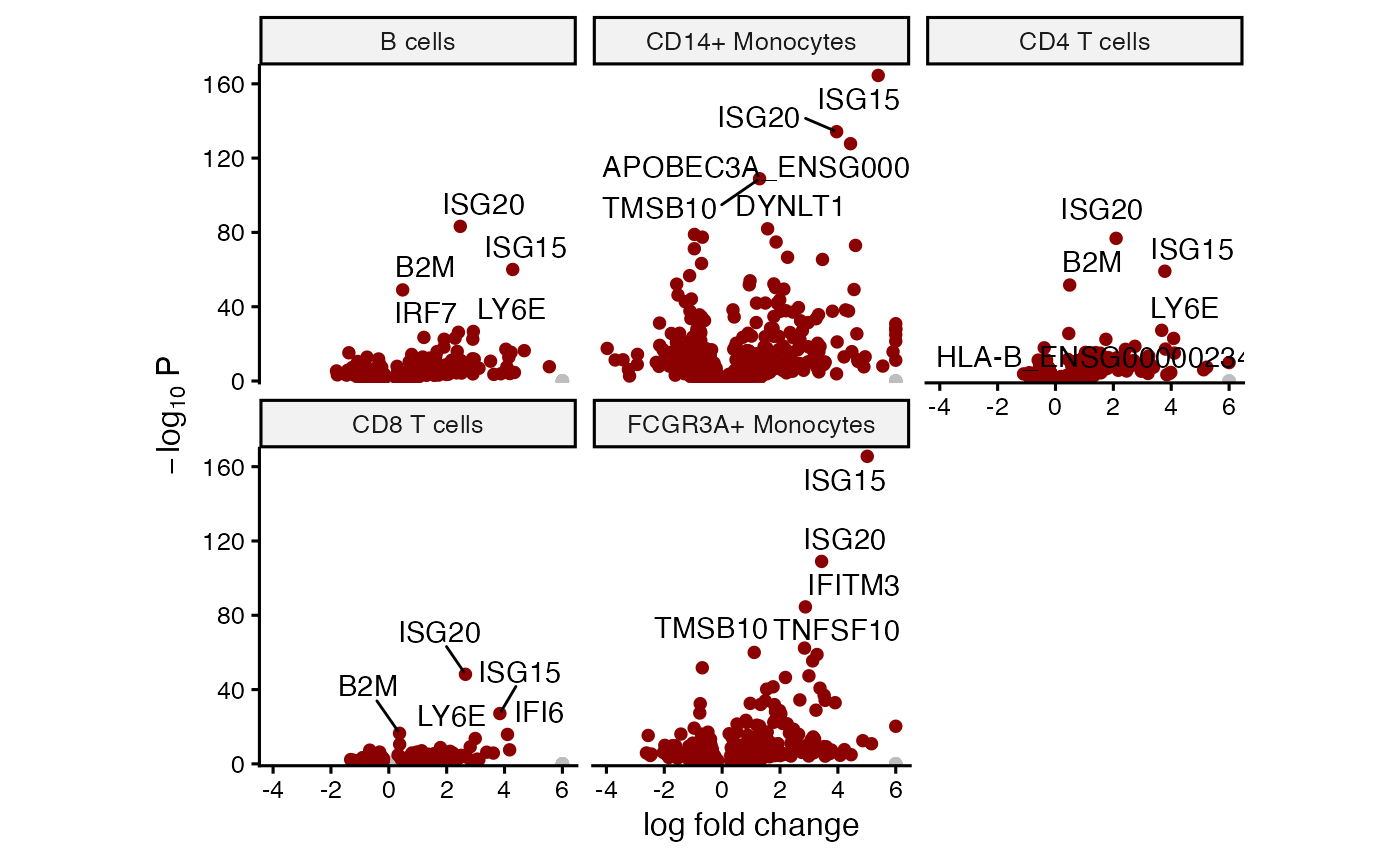
Volcano plot for each cell type
Usage
plotVolcano(
  x,
  coef,
  method = c("classic", "Bayesian"),
  nGenes = 5,
  size = 12,
  ymax = 300,
  xmax = 6,
  cutoff = 0.05,
  ncol = 3,
  cluster_ids = names(x),
  ...
)

# S4 method for class 'lucida'
plotVolcano(
  x,
  coef,
  method = c("classic", "Bayesian"),
  nGenes = 5,
  size = 12,
  ymax = 300,
  xmax = 6,
  cutoff = 0.05,
  ncol = 3,
  cluster_ids = names(x),
  ...
)
Arguments
- x
result from
lucida()- coef
coefficient to test with
results()- method
"classic": multiple testing correction using Benjamini–Hochberg method, or "Bayesian": shrink coefficient estimates and report local FDR from
ashr::ash()using empirical Bayes approach.- nGenes
number of genes to highlight in each volcano plot
- size
text size
- ymax
maximum value to show on the y-axis
- xmax
maximum value to show on the x-axis
- cutoff
adj.P.Val cutoff to distinguish significant from non-significant genes
- ncol
number of columns in the plot
- cluster_ids
which cell types to plot
- ...
arguments passed to
facet_wrap(). Useful for specifyingscales = "free_y"
Examples
library(SingleCellExperiment)

# Load example data
data(example_sce, package="muscat")
sce <- example_sce

# Compute library size for each cell
sce$libSize <- colSums(counts(sce))

# Specify regression formula and cell annotation
form <- ~ group_id
fit <- lucida(sce, form, "cluster_id", verbose=FALSE)
#> B cells
#> CD14+ Monocytes
#> CD4 T cells
#> CD8 T cells
#> FCGR3A+ Monocytes

# Volcano plot
plotVolcano(fit, "group_idstim")